

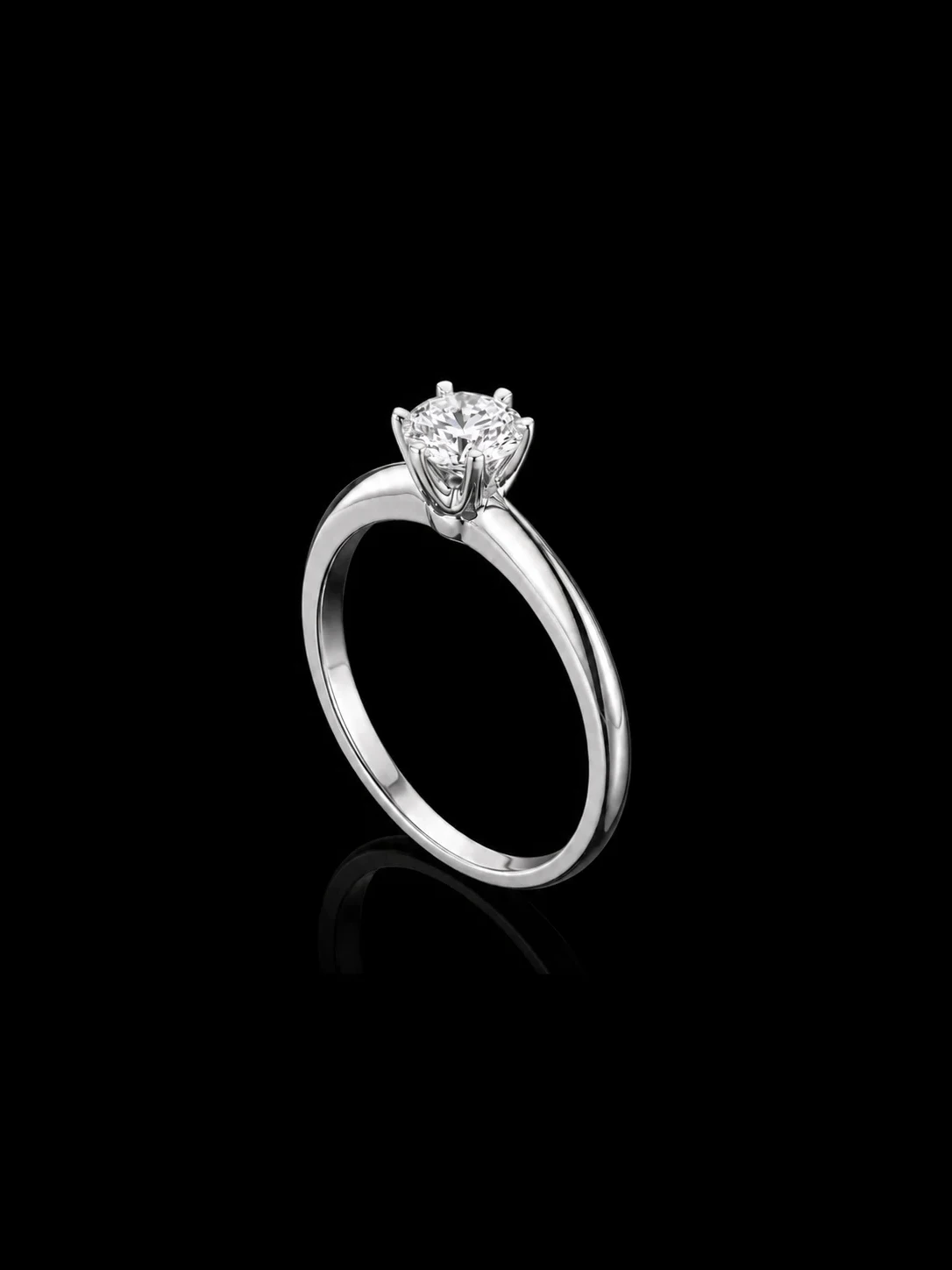
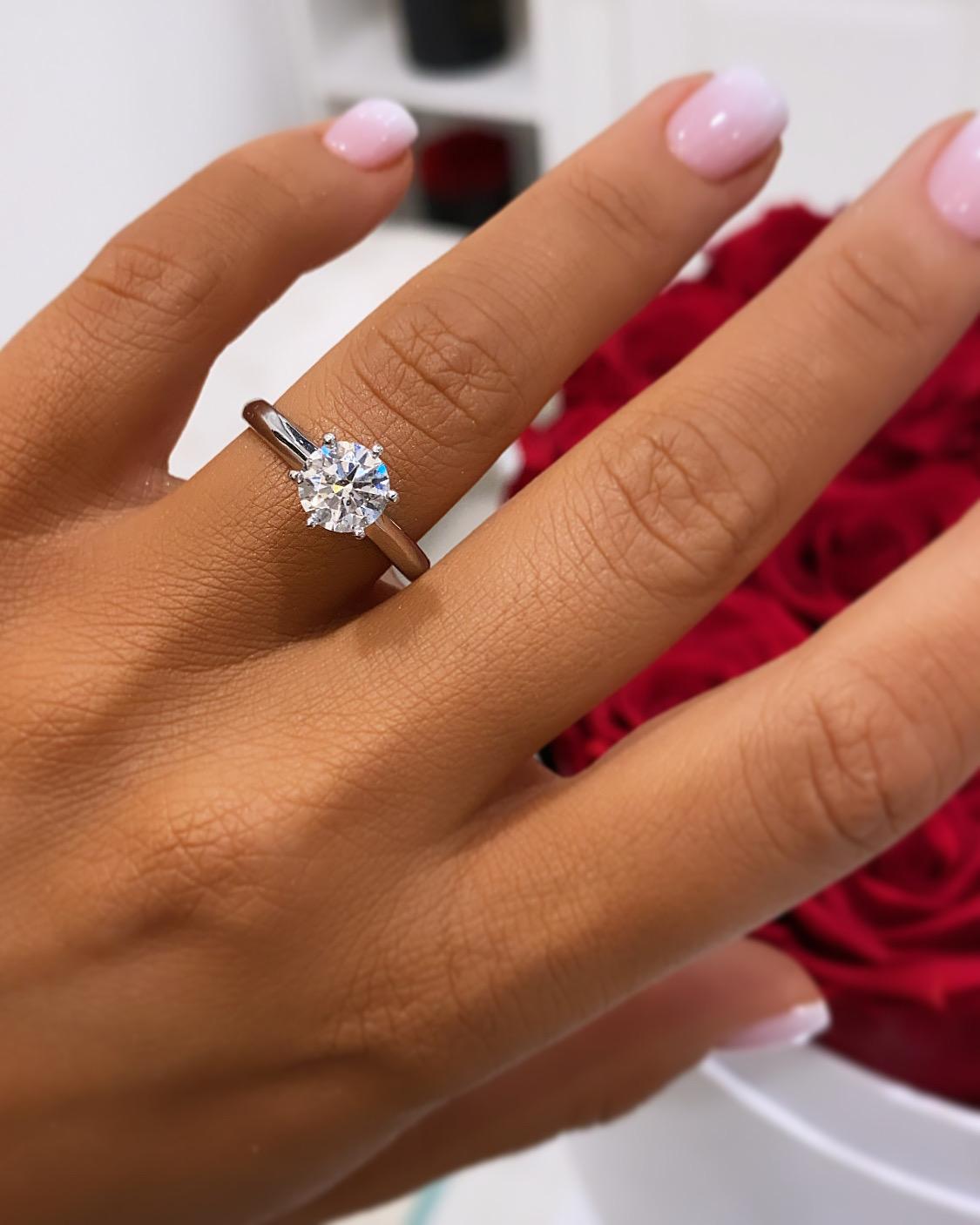
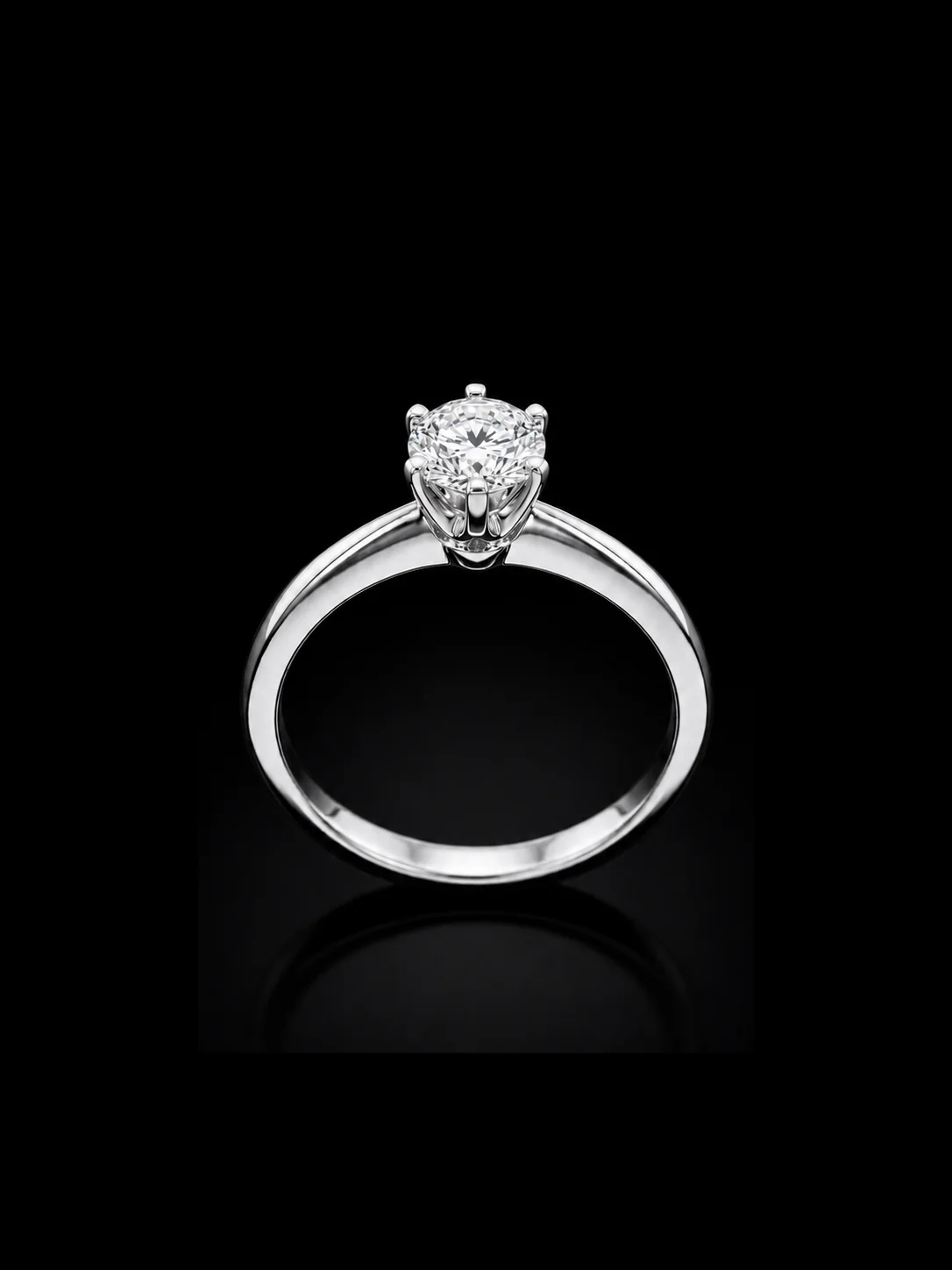
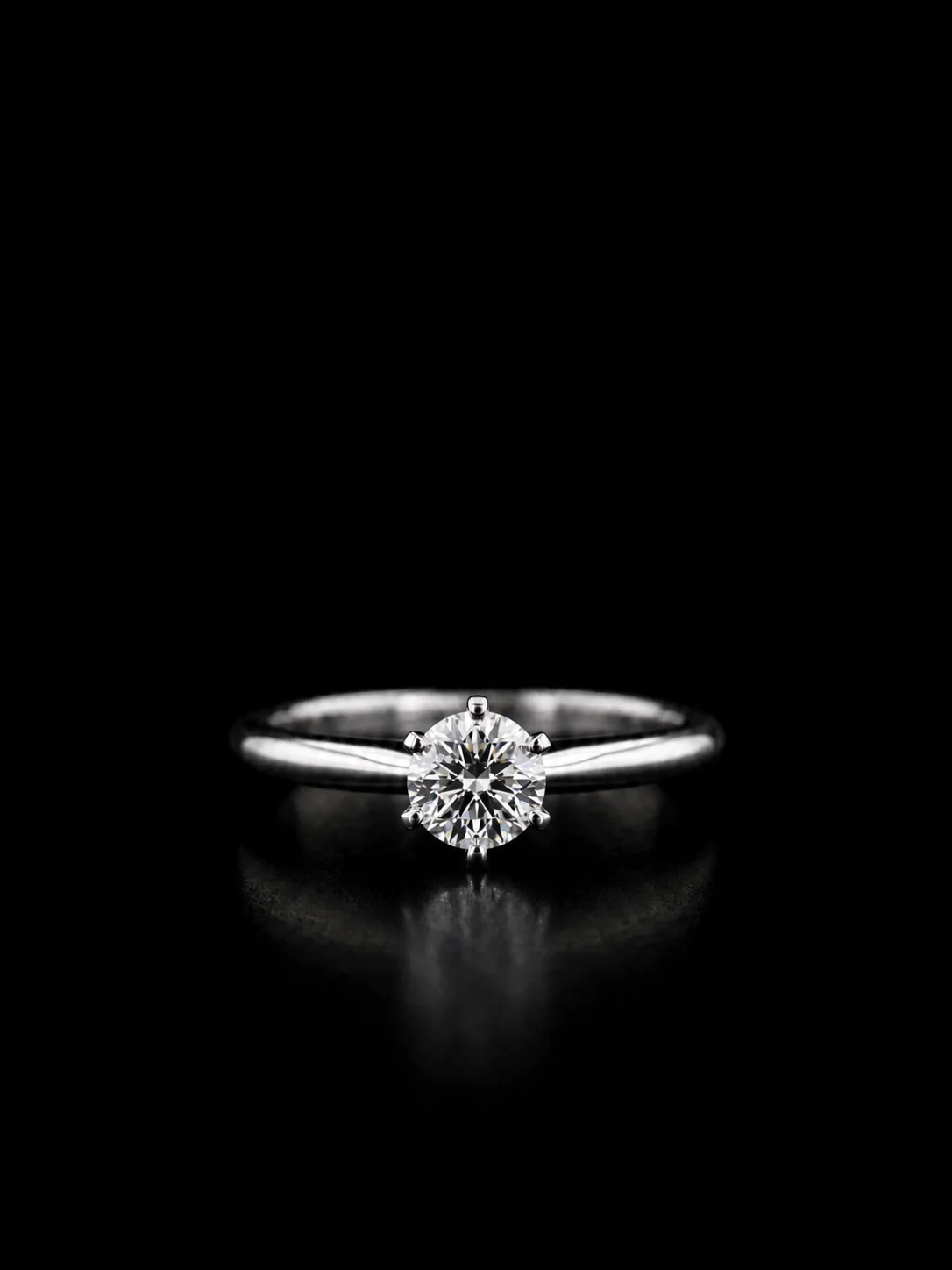
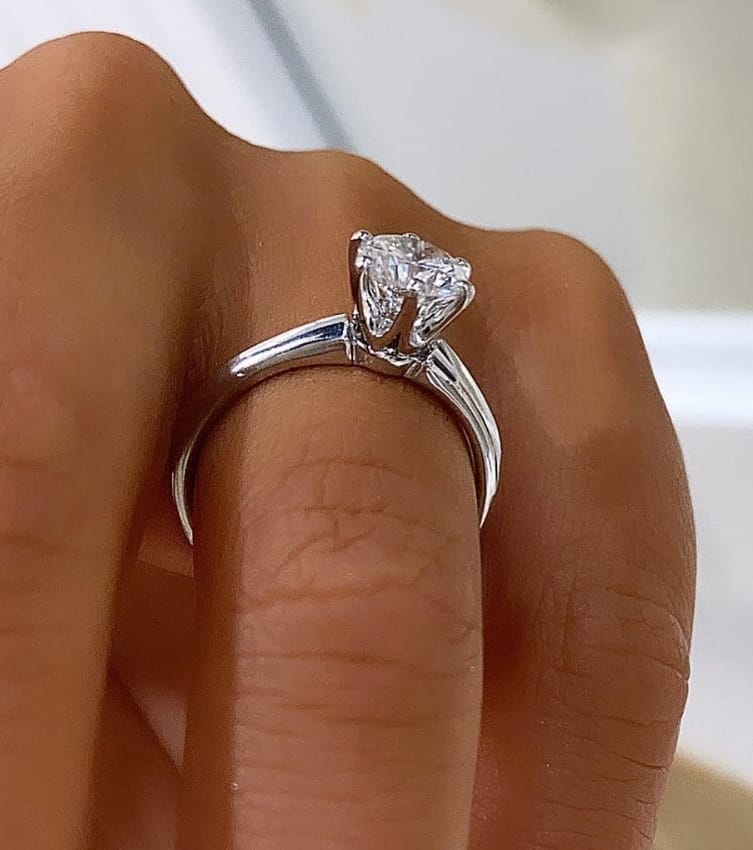
TheTiffany ™ Engagement Ring in platinum
TheTiffany™ with a 0.91-carat natural centre diamond, super-white G colour and IF clarity, with GIA documentation. Platinum, a solitaire arrangement with one natural diamond.
 0,91 ct · G · IF
 1,03 ct
| Material | Platinum |
|---|---|
| Product weight | Approx. 4.73g |
| Center stone | Diamond, 0.91ct, round, color G, clarity IF, cut very_good, certificate GIA |
| Model | TheTiffany™ 0.91ct |
| Included | Certificate, packaging |
| Warranty | Lifetime warranty |
| Diamond origin | NATURAL |
TheTiffany ™ Engagement Ring in platinum
TheTiffany™: a 0.91-carat natural diamond in platinum
TheTiffany™ from M&M GOLD features a 0.91-carat natural centre diamond with G colour and IF clarity and GIA documentation. The setting is platinum, and the round diamond has a Very Good cut grade. Platinum forms the setting for a natural G diamond with IF clarity.
The single natural diamond weighs 0.91 carats. The complete piece weighs approximately 4.73 g. A certificate and box are included. Centre proportions, setting height and the line of the platinum shank provide practical comparisons with other solitaire rings. The box is suitable for presenting the jewellery and storing it separately.
The 0.91-carat natural centre diamond
Carat weight and proportions
The weight of 0.91 carats describes the individual natural centre diamond. A metric carat, written ct, equals 0.2 g. When choosing a ring, consider carat weight alongside measurements, proportions and the way the diamond is set. The top view shows its surface and relationship to its surroundings, while the side view reveals the height of the complete setting.
View the 0.91-carat centre in relation to the platinum shank and the way it is set. With a single diamond, its outline is particularly clear against the setting. The top view shows proportions on the finger, while the profile reveals height and position alongside other jewellery.
G colour and IF clarity
The natural centre diamond has G colour. On the D–Z scale, G belongs to the near-colourless group; in jewellery communication, we describe diamonds of this colour as super white. The precise G grade is one centre characteristic to consider alongside proportions and cut.
The natural centre has confirmed IF clarity. IF, or Internally Flawless, means no visible inclusions when assessed at 10× magnification. In the finished ring, relate these characteristics to the 0.91-carat centre's proportions and setting profile. Viewing under several types of light complements the GIA documentation.
Light and the centre diamond's cut
The natural centre diamond has a Very Good cut grade. Cutting the round diamond affects how it reflects and disperses light. In a solitaire arrangement, focus on white reflections, coloured flashes and changing light and dark areas as the hand moves slowly. The platinum setting surrounds the individual centre diamond.
View the individual diamond in diffuse and focused lighting. The first helps assess the overall appearance of the centre and metal; the second reveals individual reflections. Keep a similar background when comparing with other rings. Gently changing the angle shows the round outline and setting proportions from a typical wearing perspective.
The centre diamond's round outline
The natural centre diamond has a round shape, and its cut quality is described by the grade Very Good. Shape describes the outline, while cutting involves proportions and facet arrangement. During a viewing, look at the centre diamond's contour, reflections near its edge and its setting. These details help when comparing rings with diamonds of similar carat weight.
A solitaire arrangement with one natural diamond
This TheTiffany™ version is based on one 0.91-carat natural diamond. The solitaire form focuses attention on the centre and its relationship to platinum. During a presentation, view it from above and then in profile. The round outline, setting and line of the shank form the arrangement of this particular version.
In a single-diamond ring, the proportion between the centre and shank width is particularly important. Assess it on the finger, up close and from a typical wearing distance. Also observe the metal elements around the diamond, setting height and space beside the ring when paired with a wedding band.
IF clarity in the natural centre
The 0.91-carat natural diamond combines G colour with IF clarity and a Very Good cut grade. In a solitaire, these characteristics describe one centre. Compare its outline, reflections and setting, then relate the ring's profile to your preferred position on the hand.
Colour and clarity describe different elements of a diamond's characteristics. The precise colour grade is considered alongside the assessment of internal and surface features. When choosing a solitaire, establish your priorities for these characteristics, weight and cut. Documentation and a viewing of the finished jewellery relate numerical information to the individual natural diamond's appearance.
The platinum setting
The setting is platinum. The piece weighs approximately 4.73 g. Compare the metal colour with a favourite wedding band or other jewellery. In the finished ring, platinum forms the shank and construction holding the natural centre diamond.
White platinum forms a light-coloured setting for the natural diamond. View the shank surface, setting elements and the relationship between metal and the arrangement seen from above. When comparing with a wedding band, consider the colour and profile of both settings. Several viewing angles help assess whether the proportions suit the wearer's preferences.
Natural origin and GIA documentation
M&M GOLD offers exclusively natural diamonds. This TheTiffany™ version contains one 0.91-carat natural diamond. Origin is combined with G colour, IF clarity and a round shape. The solitaire form focuses on the individual centre and its platinum setting, allowing you to examine the diamond's proportions and ring construction separately.
The 0.91-carat natural centre diamond has GIA documentation. A certificate and box are included. Keep the documentation with purchase records in a dry, safe place. During a presentation, discuss the centre's characteristics and the document's scope with a jeweller. The box is suitable for presenting the ring and storing it separately.
Choosing a ring with natural diamonds
Comparing characteristics and construction
The comparison starts with a 0.91-carat natural diamond, G colour, IF clarity, Very Good cut grade and GIA documentation. In the finished piece, also consider platinum, the setting profile and approximately 4.73 g piece weight. Complement comparisons with other solitaires by trying them on and viewing them under similar lighting.
A solitaire ring's price reflects the individual diamond's characteristics, precious metal and setting construction. Assess carat weight, colour, clarity and cut together. Compare current purchase offers for complete pieces with similar centre characteristics and documentation. Then compare the profile, platinum shank proportions and position on the finger with your jewellery preferences.
An engagement and a choice for someone close
This ring can be chosen for an engagement or anniversary, guided by the intention of the gift and your loved one's taste. Knowing their preferred platinum colour, jewellery proportions and preference for a single centre or a multi-diamond arrangement is helpful. Size and comfort are best assessed during a fitting.
When trying on the ring, check its fit, freedom to bend the fingers and contact with adjacent fingers. If it will be worn with a wedding band, view both pieces together. The setting's profile and shoulder width affect how they sit side by side. Assess comfort in several natural hand positions, including with the hand relaxed at your side.
Caring for diamonds and the platinum setting
Gentle cleaning
For gentle cleaning, use lukewarm water, mild soap and a soft brush. Clean accessible diamond surfaces, the area around its setting and the platinum shank. Gentle movements help remove cosmetic residue without firm pressure on the setting. A clean surface makes the individual centre's reflections easier to view during wear and a presentation of the ring.
Rinse the ring in a separate bowl, then dry it with a soft, clean cloth. Avoid firm pressure on small diamond settings. A jeweller should choose ultrasonic or steam cleaning after assessing the setting and the security of the diamonds. For persistent dirt, entrust the jewellery to a professional who can select a method suited to the construction's current condition.
Wearing the ring and checking its setting
Take the ring off before exercise, forceful manual work and contact with harsh cleaning products. Be mindful of the setting's profile when wearing gloves or loosely woven fabrics. Removing jewellery before these activities limits exposure of the platinum and settings to pressure or catching. After taking it off, put it straight into its usual storage place.
A setting inspection covers the individual natural centre diamond's security. Arrange a jeweller's assessment if you notice looseness, a change in the diamond's position or increased catching on fabric. Keep the ring in its box until it has been checked. The inspection assesses the elements holding the centre and the platinum construction before further wear.
Separate storage
Store the ring in a separate soft compartment or its box, leaving room around the diamond arrangement. Keeping it separate limits rubbing against other pieces. Put jewellery on after applying hand cream, perfume and styling products. These habits help keep diamond surfaces clean and care for the platinum setting between periods of wear.
M&M GOLD
Questions and answers
The most important questions about this piece — answered by M&M GOLD.
Yes, the individual 0.91-carat centre diamond is natural. M&M GOLD offers exclusively natural diamonds. The centre has G colour and IF clarity, with GIA documentation.
The arrangement focuses on one 0.91-carat natural diamond with G colour and IF clarity. The setting is platinum. The round diamond has a Very Good cut grade.
The natural centre diamond weighs 0.91 carats. Its characteristics also include G colour, round shape, a Very Good cut grade and GIA documentation.
A solitaire arrangement focuses on one centre diamond. In this version, the 0.91-carat natural diamond is set in platinum and forms the main decorative element.
The natural centre diamond has G colour. On the D–Z scale, G belongs to the near-colourless group; in jewellery communication, we describe diamonds of this colour as super white. The precise G grade is one centre characteristic to consider alongside proportions and cut.
The natural centre diamond has a cut grade of Very Good. Cutting and proportions affect how a diamond responds to light. During a viewing, observe the reflections as the hand moves.
The centre has a round outline. Its shape is visible from above, while the side view shows the setting profile and proportions of the platinum construction.
IF, or Internally Flawless, means no visible inclusions when assessed at 10× magnification. The 0.91-carat natural centre has this confirmed grade.
Visible size depends on measurements, proportions and how the diamond is set. Relate 0.91 carats weight to the face-up view and the complete setting profile.
The platinum setting surrounds one natural G-colour diamond. View the combination in diffuse and focused lighting, observing metal reflections and shank proportions.
The setting is platinum. Compare its colour and profile with a wedding band or jewellery worn alongside the ring.
The complete piece weighs approximately 4.73 g. When trying it on, also assess the fit, shank width and profile height.
Yes, the 0.91-carat natural centre diamond has GIA documentation. The document describes the diamond examined, and the ring comes with a certificate and box.
Start with the diamond's identification, carat weight, shape, colour, clarity and cut information. Read the scope of the particular report. During a consultation, discuss it alongside the piece presented.
Ct means metric carat, a unit of mass equal to 0.2 g. In this ring, the individual natural centre diamond weighs 0.91 carats.
View it in diffuse and focused lighting against a similar background. Slowly moving the hand reveals the changing reflections of the individual centre and its platinum setting.
G is a natural diamond's colour grade, while IF is a clarity grade. In this ring, both describe the single 0.91-carat centre and complement its Very Good cut information.
The natural diamond's characteristics, precious metal and setting construction affect the price. Assess carat weight, colour, clarity and cut together and compare them with the current price of the complete piece.
Relate platinum's colour and proportions to the natural diamond's appearance and your jewellery. Try the ring alone and with a wedding band to assess the profile and how they sit together.
Yes, a ring with natural diamonds can be chosen for an engagement. Consider your loved one's taste, preferred platinum colour and arrangement, then choose the right size.
Check the fit on the finger, freedom of hand movement and contact with adjacent fingers. Also assess the centre's height and comfort with the hand relaxed at your side.
Try both pieces on together and view the space between their settings. Check how they sit at the base of the finger and during movement. The profiles and shank widths affect their fit together.
Compare the individual diamond's precise characteristics, documentation and precious metal. Then assess proportions, setting height, construction and the current complete-ring price under similar viewing conditions.
A certificate and box are included. The 0.91-carat centre diamond has GIA documentation. The box is suitable for presenting the jewellery and storing it separately.
Rarity relates to the combination of carat weight, colour, clarity and other individual characteristics of a natural diamond. Large natural diamonds occur less frequently than small ones. Assess an individual diamond through its complete set of characteristics and documentation.
Use lukewarm water, mild soap and a soft brush. Clean accessible surfaces, rinse in a separate bowl and dry with a soft cloth, without firm pressure on the settings.
A jeweller should choose the method after assessing the setting and the individual natural diamond's security. The professional checks the setting before using the device.
Remove it before exercise, forceful manual work and contact with harsh chemicals. Be careful with gloves or fabrics that could catch on the setting.
Keep it separately in a soft compartment or its box. Leave space around the decoration to limit rubbing against other jewellery. Put it on after applying cosmetics.
Arrange a jeweller's assessment if you notice looseness, a diamond shifting or pronounced catching on fabric. Keep the ring in its box until the inspection.
Newsletter
Subscribe to our newsletter. Launches, previews and private events.