

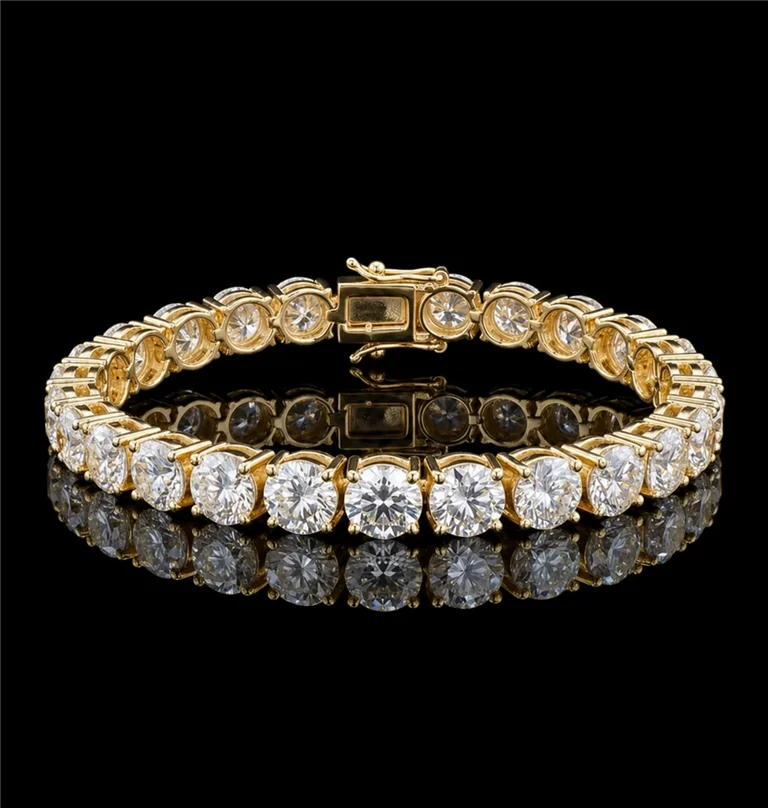
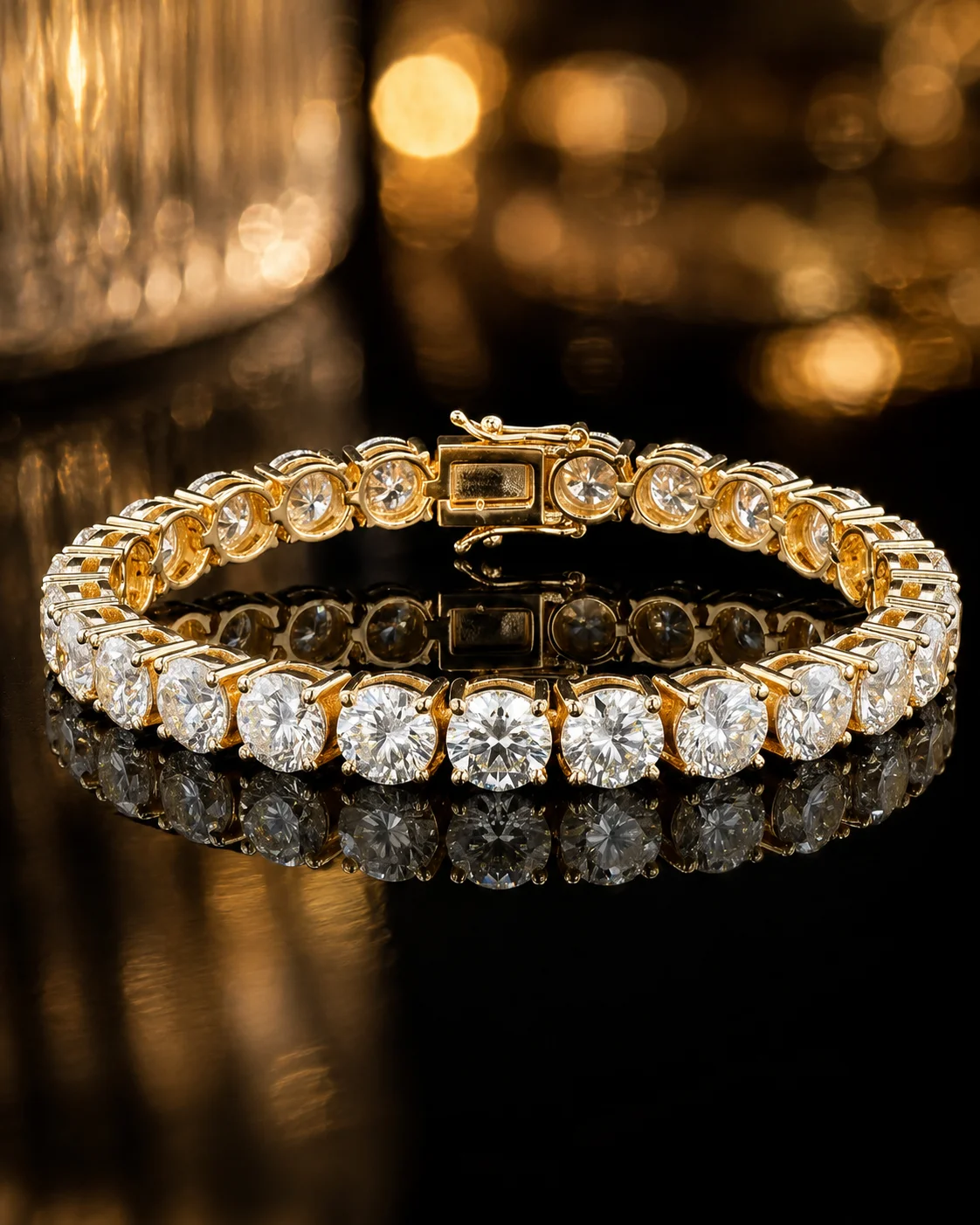
Tennis Bracelet Diamonds 1.00ct each in 18k yellow gold
A tennis bracelet with 26 natural brilliant-cut diamonds weighing approximately 26.49 carats combined. K–L colour, VVS1–VS2 clarity and 18K yellow gold.
| Material | 18 karat yellow gold |
|---|---|
| PRODUCT WEIGHT | Approx. 32.80g |
| TOTAL BRILLIANT WEIGHT | ~Approx. 26.49ct |
| DIAMONDS | 26 diamonds ~26.49ct |
| Model | Tennis Bracelet 26.49ct |
| DIAMOND COLOR | K-L |
| DIAMOND CLARITY | VVS1-VS2 |
| INCLUDED | Certificate, Packaging |
| WARRANTY | Lifetime Warranty |
Tennis Bracelet Diamonds 1.00ct each in 18k yellow gold
Tenisówka: natural diamonds and 18K yellow gold, fineness 750
A tennis bracelet with 26 natural brilliant-cut diamonds weighing approximately 26.49 carats in total. The diamonds have K–L colour and VVS1–VS2 clarity. The setting is made of 18K yellow gold, fineness 750, and the piece weighs approximately 32.80 g.
The natural diamonds form a single row of 26 brilliant-cut diamonds. Yellow gold is visible between the settings and along their sides, while the rounded line of successive elements runs around the wrist. This design presents large diamonds in a repeating arrangement, drawing attention to the complete diamond line.
Weight and characteristics of natural diamonds
Weight expressed in carats
Approximately 26.49 carats is the total weight of the natural diamonds in Tenisówka. The metric carat, abbreviated ct, is a unit of gemstone weight equal to 0.2 g. Jewellery descriptions use carats for individual diamonds and groups of diamonds. Dimensions in millimetres, proportions and setting complement the description of their size within a finished piece.
During a fitting, examine how the full row sits around the wrist. Check ease of hand movement, the clasp position and the space beside a watch or another bracelet. The piece's weight of approximately 32.80 g also provides a useful reference when comparing how different designs feel to wear.
Specifications and appearance of the arrangement
The VVS1–VS2 clarity range spans the Very Very Slightly Included and Very Slightly Included categories. It describes the natural diamonds used in the bracelet. Gemmological grading considers internal and surface characteristics under defined observation conditions.
The VVS1–VS2 clarity range describes the group of 26 natural diamonds in this bracelet. Consider clarity alongside K–L colour and the brilliant cut. When viewing the complete row, the proportions of successive diamonds and their appearance together in yellow gold also matter.
Light, proportions and diamond cut
Cut affects the way light travels through a diamond and is directed towards the observer. Gemmology considers, among other things, the reflection of white light, the dispersion of light into colours and the changing pattern of light and dark areas during movement. Together, these phenomena create the appearance of a diamond set in jewellery. Their perception changes with the viewing angle and type of lighting.
The rounded brilliant-cut surfaces create successive points of reflection along the wrist. Diffuse light shows the continuity of the row, while spot lighting reveals individual diamond reflections. Gently turn the wrist and examine the side sections as well, since their position changes during movement.
Shape and cut quality in gemmology
Shape describes the outline of a diamond, while cut quality concerns how it has been fashioned. Both terms play separate roles in gemmological characterisation. When comparing diamonds, shape information is considered alongside an assessment of proportions and interaction with light. This general knowledge is helpful when exploring diamond jewellery and discussing the desired appearance of a piece.
Arrangement and cuts of the natural diamonds
The brilliant cut uses a facet arrangement that contributes to bright reflections and the dispersion of light. In this bracelet, that effect repeats along the entire row of 26 natural diamonds.
An angled view reveals the height of the individual settings and their connections. From above, examine the complete line of 26 diamonds; from the side, the yellow gold's role in the composition becomes visible. Both views show the construction and proportions of different sections of the tennis bracelet.
Colour and the jewellery colour scheme
The diamonds have K–L colour. On the D–Z scale these letters fall within the Faint category, with a subtle presence of colour. The warm appearance complements yellow gold. The precise K–L designation allows comparison with other bracelets of similar diamond count and weight.
View the K–L colour against the yellow gold used in this bracelet. The warm metal contributes to the appearance of the complete composition. Similar lighting is useful when comparing designs, particularly when their metal colour, diamond colour or the size of individual elements differs.
The setting: 18K yellow gold, fineness 750
Tenisówka is made of 18K yellow gold, fineness 750. Gold forms the setting structure and a visible part of the arrangement. Its colour can be considered alongside existing jewellery, other metals and preferred clothing colours. The finished design includes surfaces seen from above, at the side and from the interior, each contributing to its appearance. A fineness of 750 means 75% gold content, or 750 parts per 1,000 parts of alloy. The 18K designation expresses the same content in the karat system for precious metals.
The bracelet weighs approximately 32.80 g. A fitting allows assessment of its presence on the wrist and the way the row sits during gentle gestures. Before choosing, check the operation of the visible clasp and how the bracelet is put on, considering personal habits and intended occasions of wear.
Natural diamonds and documentation
M&M GOLD offers exclusively natural diamonds. The natural diamonds in Tenisówka formed through geological processes. Their individual characteristics are described through weight, colour, clarity and cut. In finished jewellery, the way diamonds are combined and the setting material also contribute to the character of the chosen design.
A certificate and packaging are included. Keep the documentation with the purchase information in a dry, safe place. Organised records provide convenient access to the jewellery specifications throughout ownership. The packaging helps prepare a gift and provides a separate place for the piece between wears.
Choosing natural diamond jewellery
Specifications that matter when comparing offers
Begin a comparison with 26 natural diamonds, approximately 26.49 carats combined, K–L colour and VVS1–VS2 clarity. Then compare 18K yellow gold, the piece's weight, link construction and appearance on the wrist. These criteria relate directly to the composition of a tennis bracelet.
The rarity of a natural diamond reflects the combination of its weight, colour, clarity and individual properties. Different combinations occur with different frequencies in nature. The price of finished jewellery also considers the matching of diamonds within the arrangement, precious metal and construction. Preferences for geometry, metal colour and intended wear help establish the most relevant selection criteria.
Anniversaries and special occasions
This tennis bracelet can be chosen for an anniversary, birthday or another significant occasion. Its defining feature is a continuous row of large natural diamonds in yellow gold. Familiarity with the recipient's preferences for noticeable wrist jewellery and warm metal colour helps when choosing a gift.
View the bracelet beside a cuff and alongside other jewellery. Leave space beside a watch to limit contact between the pieces. The included box serves for gifting and separate storage, while the certificate accompanies the purchase information.
Daily care of natural diamonds and gold
Gentle cleaning at home
For gentle care, use lukewarm water, mild soap and a soft brush. Clean accessible surfaces of the 26 settings without pressing firmly on their connecting elements. Pay attention to the clasp area as well, where cosmetics and everyday deposits may collect.
Use a separate bowl or secure the drain when rinsing. Dry the jewellery with a soft, clean cloth. Regular care helps maintain clear surfaces. For persistent residue, a professional selects a method after examining the complete setting, securing components and current condition of the piece.
Wear and setting checks
Remove the jewellery before tasks requiring substantial force, activities involving impacts and contact with harsh chemicals. Careful wear protects both diamonds and securing components. After removal, place the piece in a consistent safe location. When putting it on, check the connections and stability of visible elements.
Checking the setting assesses how securely diamonds are held. If a diamond becomes loose, changes position or a component catches on fabric, set the jewellery aside for professional assessment. The inspection includes securing components and metal condition, supporting the care of regularly worn jewellery.
Storage between wears
Place the tennis bracelet in an individual soft compartment or its box, without putting the row of settings under tension. Separate storage limits contact between diamonds and the metal of neighbouring jewellery. Putting it on after hand cream and perfume helps reduce deposits on the diamonds and yellow gold.
M&M GOLD
Questions and answers
The most important questions about this piece — answered by M&M GOLD.
A tennis bracelet with 26 natural brilliant-cut diamonds weighing approximately 26.49 carats in total. The diamonds have K–L colour and VVS1–VS2 clarity. The setting is made of 18K yellow gold, fineness 750, and the piece weighs approximately 32.80 g.
Yes, the diamonds in Tenisówka are natural. M&M GOLD offers exclusively natural diamonds.
The natural diamonds in Tenisówka weigh approximately 26.49 carats in total. They form the diamond arrangement of this design.
The Tenisówka arrangement contains 26 natural diamonds.
Tenisówka is made of 18K yellow gold, fineness 750. Its colour contributes to the appearance of the arrangement.
The Tenisówka piece weighs approximately 32.80 g. This is the weight of the finished jewellery.
The natural diamonds form a single continuous row around the wrist. The round outlines of successive brilliant-cut diamonds define its rhythm, with yellow gold visible between the settings and at their sides. An angled view reveals the height of the individual elements and the line of the complete bracelet.
The brilliant cut uses a facet arrangement that contributes to bright reflections and the dispersion of light. In this bracelet, that effect repeats along the entire row of 26 natural diamonds.
The diamonds have K–L colour. On the D–Z scale these letters fall within the Faint category, with a subtle presence of colour. The warm appearance complements yellow gold. The precise K–L designation allows comparison with other bracelets of similar diamond count and weight.
A certificate and packaging are included. The packaging helps prepare a gift and store the jewellery.
Ct means metric carat, a unit of gemstone weight equal to 0.2 g. Carats describe the weight of individual diamonds and groups of diamonds.
Apparent size depends on dimensions, proportions and setting. Top and side views reveal how a diamond relates to the surrounding setting.
Clarity is assessed at 10× magnification. The analysis considers the size, number, location, nature and visibility of internal and surface characteristics.
Shape describes the diamond outline, while cut quality concerns its workmanship. Proportions, symmetry and polish influence the appearance of a fashioned diamond.
View it in both diffused and spot lighting. Changing the angle reveals the overall arrangement and individual reflections.
Natural diamonds form through geological processes. Their structure and individual characteristics are studied in gemmology.
Rarity reflects the combination of weight, colour, clarity and individual properties. Different combinations occur with different frequencies in nature.
Price reflects diamond specifications and weight, matching within the arrangement, precious metal and setting construction. Selection also considers appearance and intended wear.
Compare diamond weights and counts, colour, clarity, cut, documentation and precious metal. During examination, consider construction, proportions and comfortable fit.
Keep the certificate with the purchase information in a dry, safe place. This provides convenient access to the jewellery specifications.
Tenisówka can be chosen for an anniversary, birthday or another special occasion. Consider the recipient’s taste and preferred gold colour.
Assess its position, freedom of movement and contact with skin and clothing. A suitable fit reflects personal habits and intended wear.
Compare metal colour, proportions and spacing between pieces. Limiting rubbing helps protect settings and neighbouring jewellery.
Lukewarm water, mild soap and a soft brush can be used for gentle care. After rinsing in a separate bowl, dry the jewellery with a soft cloth.
A professional selects the method after assessing the jewellery. Diamond properties, securing components and the complete setting construction are considered.
Tenisówka is best stored in a separate soft compartment or box. Separate storage limits diamond contact with other objects.
Have the settings checked after noticing looseness, a change in diamond position or a component catching on fabric. Set the jewellery aside safely until professional assessment.
Remove jewellery before tasks requiring force, activities involving impacts and contact with harsh chemicals. This helps protect diamonds, metal and securing components.
Put the jewellery on after applying creams, perfume and styling products. Regular gentle cleaning removes deposits from diamonds and gold.
Consider preferred gold colour, style and suitable fit. Other jewellery worn by the recipient and the intended occasions are also useful points of reference.
Newsletter
Subscribe to our newsletter. Launches, previews and private events.