

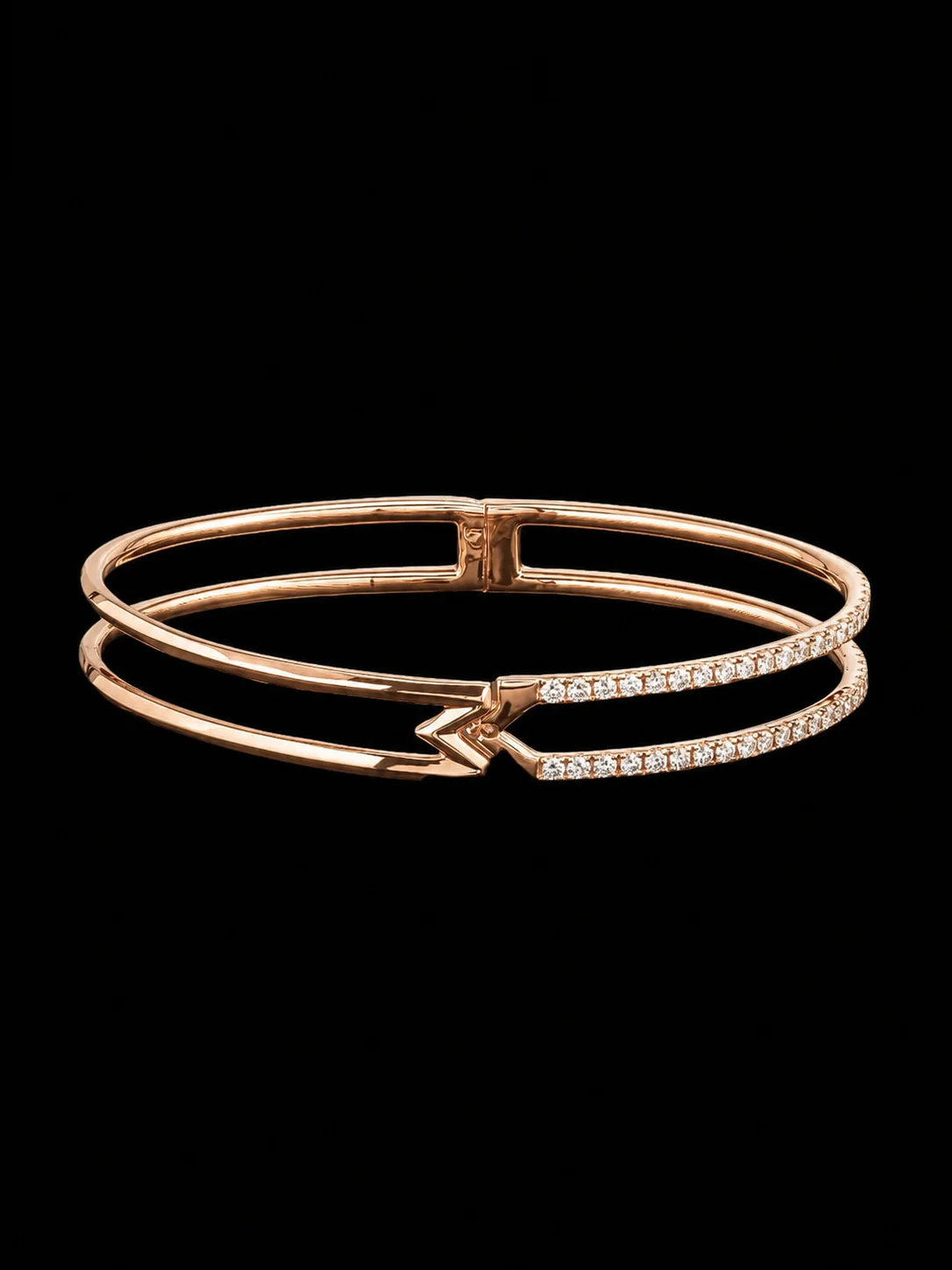
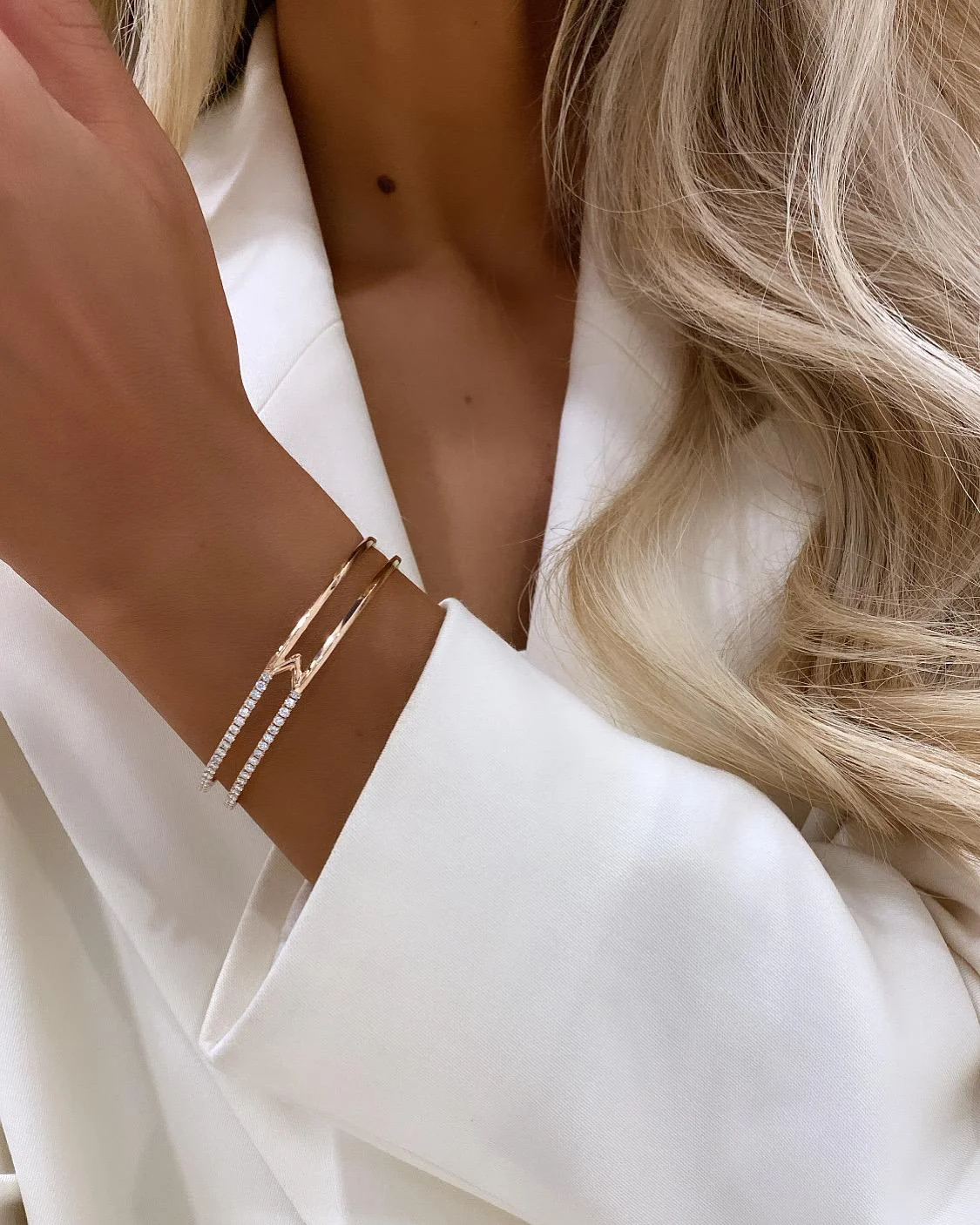
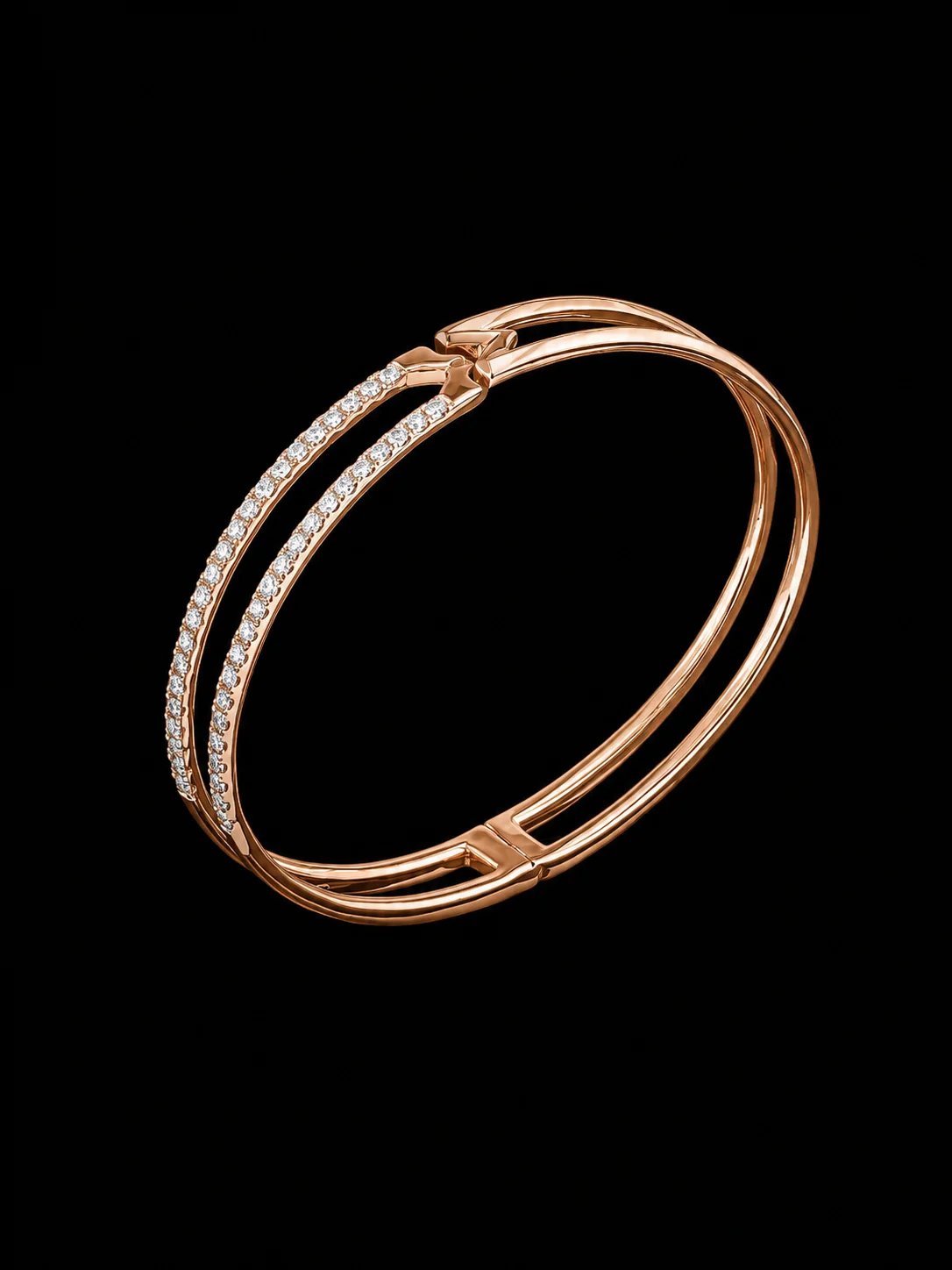
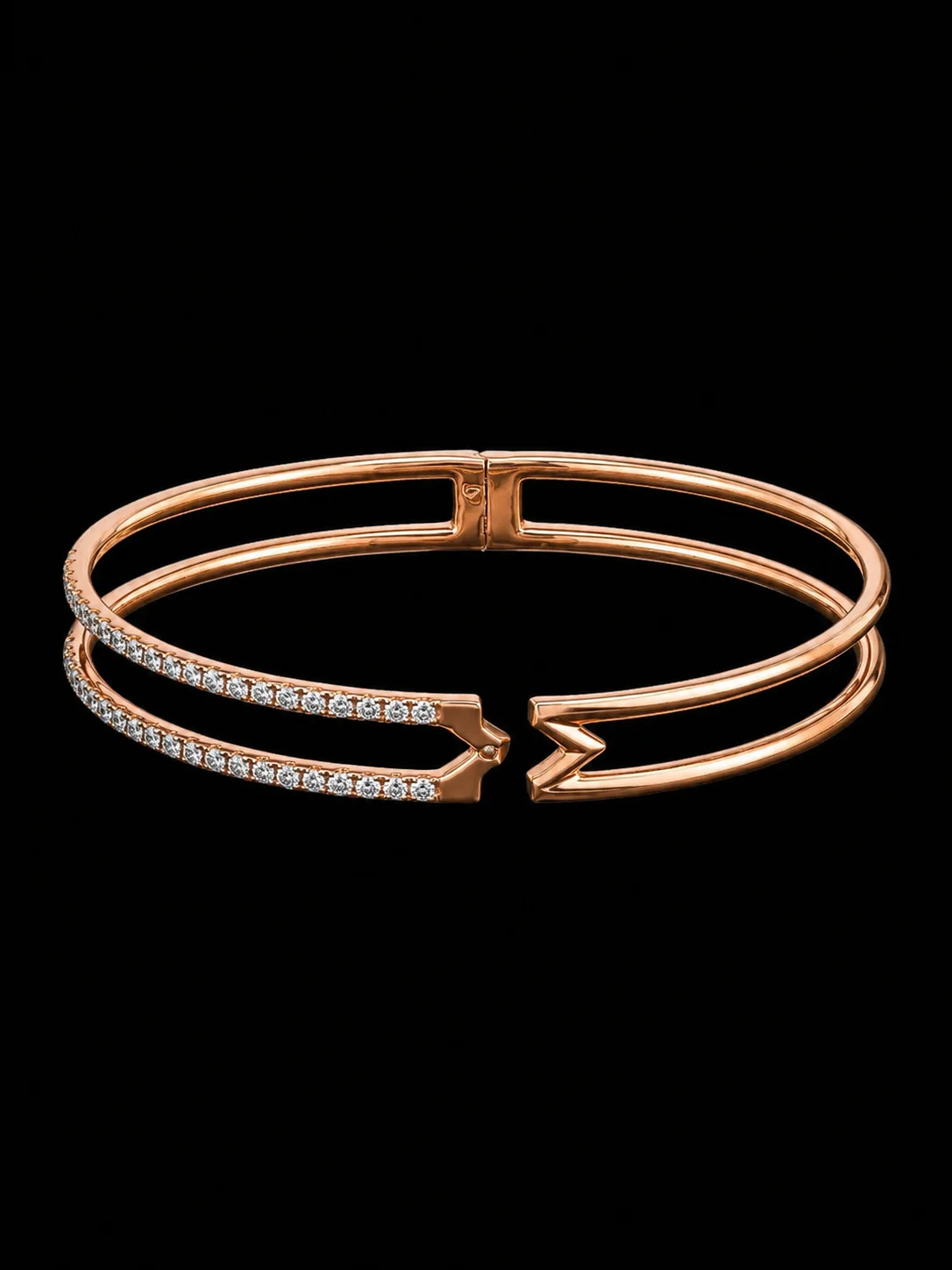
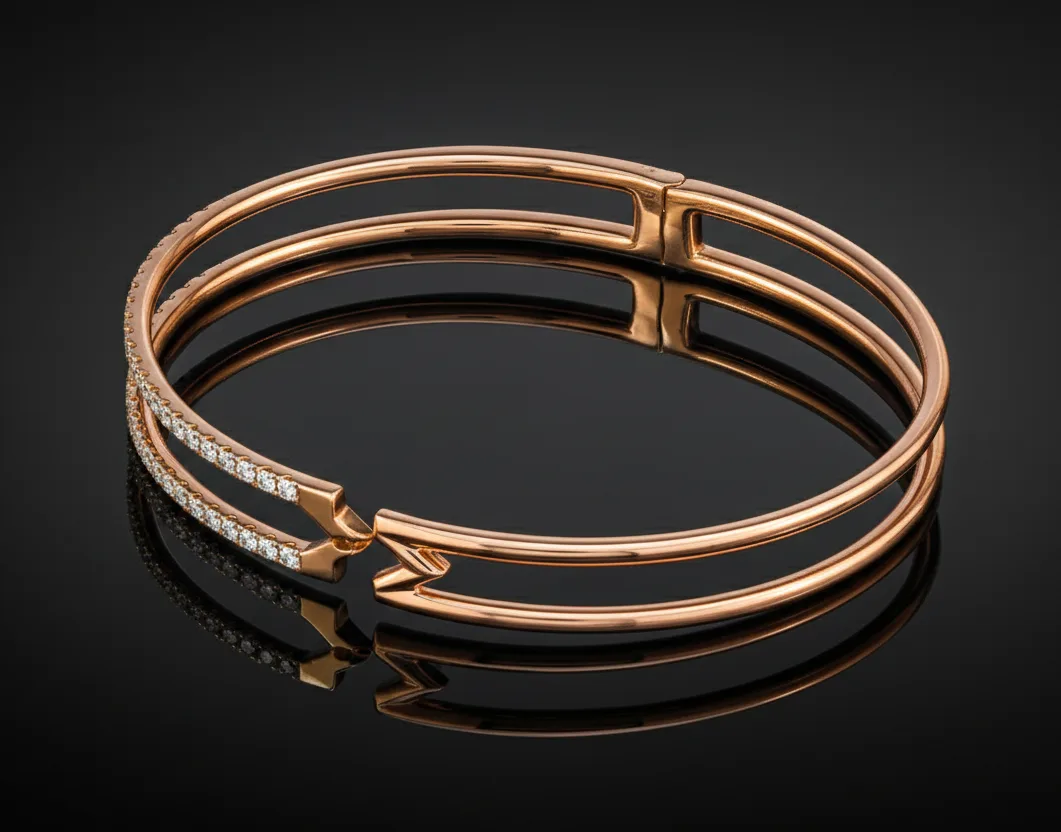
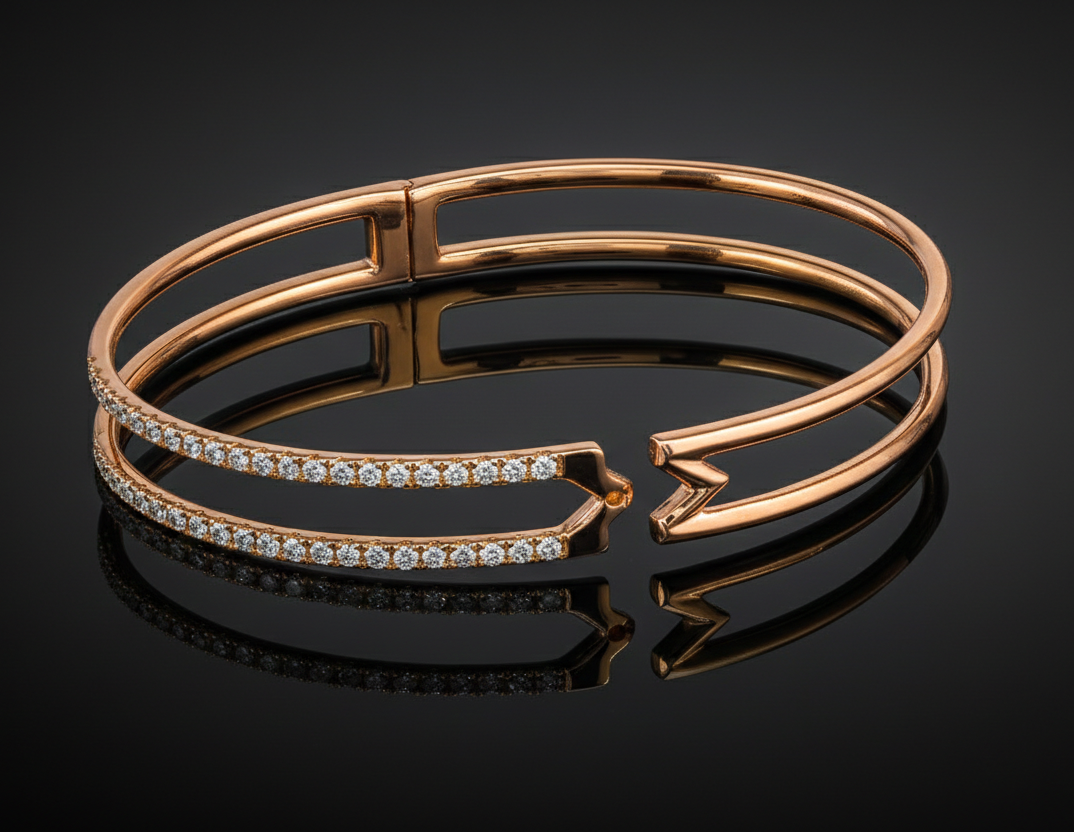
"Mystery ™" Bracelet in 18k rose gold
Rigid bangle bracelet with 44 natural diamonds weighing approximately 0.97 carats in total, with F–G colour. 18K rose gold, brilliant-cut diamonds.
| Material | 18 karat rose gold |
|---|---|
| PRODUCT WEIGHT | Approx. 17.40g |
| TOTAL BRILLIANT WEIGHT | ~Approx. 0.97ct |
| DIAMONDS | 44 diamonds ~0.97ct |
| Model | Mystery™ Bracelet |
| DIAMOND COLOR | F-G |
| DIAMOND CLARITY | VVS-SI |
| INCLUDED | Certificate, Packaging |
| WARRANTY | Lifetime Warranty |
"Mystery ™" Bracelet in 18k rose gold
Diamond bracelet in a bangle form
The Mystery™ diamond bracelet combines a rigid bangle form with 44 natural diamonds weighing approximately 0.97 carats in total. The diamonds have F–G colour and the setting is made from 18K rose gold. This version brings together the proportions of a defined metal form and the placement of a diamond composition on the wrist.
M&M GOLD offers exclusively natural diamonds. View this design as a combination of diamond material and bangle construction. The finished piece weighs approximately 17.40 g. During a fitting, assess the distribution of that weight, contact between the setting and skin, and the position of the composition as the hand moves naturally.
Natural diamonds and the design composition
Diamond surfaces and the gold setting
This version contains 44 natural diamonds. The design’s appearance comes from the relationship between diamonds and gold, so examine both the setting detail and the complete outline of the bracelet on the arm. These two perspectives reveal the scale of the pattern and how it works with the wrist.
A rigid form maintains a defined jewellery outline. During a fitting, consider how the composition looks with the arm lowered and after turning the hand. Combine the visual assessment with a comfort check, because the character of a bangle involves both its shape and how it is worn near the wrist.
Total weight and natural diamond cuts
The total diamond weight is approximately 0.97 carats. This version contains brilliant-cut diamonds. When viewing it, consider how reflections change in motion and the balance between the diamond portion of the composition and the metal setting. Both elements contribute to the appearance of the finished bracelet.
Photographs help reveal the design, while a fitting adds its actual-scale proportions. View the natural diamonds in diffuse light and from several angles. This shows the rhythm of reflections and how the gold and diamonds look against the wearer’s natural skin tone.
F–G colour and natural origin
The F–G natural diamonds are described as super white. This version surrounds them with 18K rose gold, introducing a warm metal tone. Examine the combination of light diamonds and rose gold against your own skin in diffuse light and with gentle hand movement.
Natural origin describes the material’s origin, while colour is one of its gemmological characteristics. Mystery™ uses natural diamonds in accordance with the consistent standard of the M&M GOLD collection. Consider this information together with the diamond count, their total weight and the design of the gold setting.
Viewing white diamonds in a gold setting
Consider the light appearance of the diamond composition and its relationship with the gold colour. A neutral background also helps when comparing different pieces. Gentle hand movement reveals changing reflections, while a fitting shows whether the scale and character of this rigid bracelet suit your preferences.
18K rose gold and jewellery weight
The setting is made from 18K rose gold, an alloy containing 75% gold. The metal colour is an important part of this version. Compare it with your other accessories and skin tone to assess the desired effect: a consistent metal palette or a deliberate combination of different gold colours.
The finished bracelet weighs approximately 17.40 g. In rigid jewellery, checking how the weight is distributed on the arm is particularly useful. During a fitting, assess the position of the metal form, contact between its edges and the skin, and freedom of hand movement without forcing or deforming the construction.
Fitting a rigid bracelet
A fitting is the best way to check the rose gold version’s fit. With a rigid bracelet, wrist shape, preferred movement and the way the particular piece is put on matter. Ask a jeweller to help assess size and examine the composition with the hand relaxed and after gently turning the arm.
A well-selected bangle should match your preferred movement and position on the arm. Try the bracelet with the arm lowered and after gently turning the hand. Do not bend the rigid outline to change the fit; a jeweller should assess any possible size alteration.
Bracelet documentation and specifications
A certificate and packaging are included. Keep the document with the selected gold colour and the natural diamond specifications. In a collection with several versions, organising these details makes it easier to relate care and fitting questions to the particular piece.
The confirmed details of this version are 44 natural diamonds, approximately 0.97 carats in total, F–G colour, 18K rose gold and a finished weight of approximately 17.40 g. Use the specifications of the correct gold-colour version when comparing designs, as individual bracelets may also differ in diamond count and weight.
Comparing diamond bangle bracelets
Begin a comparison with the form, proportions and wrist fit. Then consider the natural diamond count and total weight, their colour and the gold. In a rigid bracelet, the apparent width and the position of the metal construction also matter and are best assessed during a fitting.
Price incorporates the natural diamonds, the quantity of gold and the work involved in the construction and setting. Consider these details together with the character of the design. Clear specifications focus the discussion on the features of the particular bracelet and help match it to the way you wear jewellery.
Wearing and combining a rigid bracelet
An individual feature on the wrist
The defined bangle outline allows the bracelet to stand on its own at the wrist. If adding a ring or earrings, match their scale to the diamond composition. A consistent metal colour creates a unified combination, while different gold colours can be combined deliberately with attention to the proportions of every accessory.
When combining bracelets, leave space between metal surfaces. Repeated impacts and friction can mark gold and place stress on setting elements. With a watch, choosing the opposite wrist is a practical option that allows the rigid form to be worn without contact with the case.
Protecting the construction during activities
Remove the bangle before exercise that places pressure on the hands, manual work and activities involving a risk of impacts. Natural diamond is very hard, but settings and diamond edges need protection against pressure. Store and handle the rigid construction without bending it or placing heavy objects against it.
Before wearing it, examine the positions of the natural diamonds and the gold surface. If you notice a change in shape, a loose element or resistance during handling, ask a jeweller to assess it. Gentle treatment helps maintain the proportions and use the bracelet safely according to its construction.
Caring for diamonds and the gold surface
A soft cloth and gentle handling
Use a soft, lint-free cloth to refresh the surface. Remove cosmetic marks and daily deposits gently, without pressure on the settings. Clean surfaces make the reflections of natural diamonds and the gold colour easier to appreciate. Avoid powders and materials that could scratch the metal.
Leave deeper cleaning to a jeweller who can assess the piece and choose a suitable method for the setting. Avoid strong household detergents, chlorine and methods that involve levering against components. With a rigid form, preserving its shape and the security of the diamond composition matters throughout the process.
Storage without rubbing
Store the bracelet in a separate, softly lined space. Keep it away from chains, watches and other hard objects to limit surface friction. Do not force a rigid piece into a case that is too small. Comfortable placement in its packaging helps protect the metal outline and natural diamond composition.
Ultrasonic and steam cleaning require an assessment of the setting beforehand. Consult a jeweller if considering these methods. Professional cleaning can be combined with an inspection of diamond security and the construction’s general condition, so care covers the complete piece as well as the visible surface.
When to arrange jewellery servicing
Arrange an inspection after a strong impact, a visible change in shape or difficulty with handling. Keep the documentation and this version’s details together: 44 natural diamonds, approximately 0.97 carats in total, F–G, 18K rose gold and a finished weight of approximately 17.40 g. They are useful reference points when speaking with M&M GOLD.
M&M GOLD
Questions and answers
The most important questions about this piece — answered by M&M GOLD.
Yes, this bracelet contains natural diamonds. This version has 44 diamonds weighing approximately 0.97 carats in total; M&M GOLD offers exclusively natural diamonds.
This version contains 44 natural diamonds. Use the specifications of the appropriate gold-colour version when selecting, because diamond counts may differ between versions.
The total natural diamond weight is approximately 0.97 carats. The composition contains 44 F–G colour diamonds in an 18K rose gold setting.
A carat is a diamond weight unit equal to 0.2 g. This bracelet contains approximately 0.97 carats of diamonds in total, while the finished piece weighs approximately 17.40 g.
This version contains brilliant-cut diamonds. View their composition in diffuse light while moving the hand gently to assess the reflections across the complete arrangement.
The diamonds have F–G colour and are described as super white. Assess their appearance in the finished bracelet together with the gold colour on your own wrist.
In this bracelet’s description, super white refers to the confirmed F–G colour range. The exact colour range remains an important specification when comparing natural diamonds and jewellery.
A bangle is a bracelet with a rigid form that maintains a defined outline. When choosing one, check its shape, position near the wrist and how comfortably the particular piece can be put on.
Check the fit during a fitting, considering movement, position and freedom of hand motion. Do not bend the rigid form yourself; a jeweller can demonstrate the proper handling of the particular piece.
Bending a rigid bracelet yourself can damage its construction or setting. A jeweller should assess any possibility of resizing after examining the particular piece.
This version is made from 18K rose gold. The alloy contains 75% gold, and its colour forms part of the bracelet’s design and the surrounding for the natural F–G diamonds.
The finished bangle weighs approximately 17.40 g. During a fitting, check how that weight is distributed and how the metal form meets the skin with the hand relaxed.
Choose the size during a fitting, considering wrist shape, movement and how the piece is put on. A jeweller can help assess the position of the approximately 17.40 g piece and demonstrate proper handling of the rigid construction.
Yes, the bracelet comes with a certificate and packaging. Keep the document with the details of the chosen gold version, diamond count and total diamond weight.
Compare the metal colour against your skin, the natural diamond count and weight, and the finished jewellery specifications. Gold-colour versions may have different data, so discuss each particular bracelet.
Price depends on the natural diamonds, their characteristics and total weight, the quantity of gold and the construction and setting work. Consider these features together with the fit and proportions of the piece.
Compare their form, fit, metal, finished weight and natural diamond specifications. Then try both bracelets under similar lighting to assess comfort and proportions on the wrist.
A fitting lets you assess the shape, movement and weight distribution of a rigid bracelet. It adds actual skin contact and reflections during natural hand movement to the photographs.
View F–G diamonds in diffuse daylight and calm indoor lighting. Examine the composition against a neutral background and on the wrist to assess how the surroundings influence its appearance.
Yes, the surrounding metal influences the appearance of the complete composition. Assess the natural diamonds and gold colour together under several lighting conditions, preferably on your own wrist.
A rigid bracelet can accompany a ring or earrings whose proportions suit its composition. Choose a consistent metal tone or a deliberate combination of different gold colours.
Yes, while keeping the objects separated or using the opposite wrist. Limiting contact between the case and bracelet helps protect gold and setting elements against friction and impacts.
Begin with the preferred gold colour, jewellery proportions and information on wrist size. For a rigid form, a fitting with a jeweller is particularly helpful.
Avoid bending the construction or pressing on diamonds. Ask for a demonstration of the particular piece and stop if you encounter resistance or a change in shape.
Yes, remove it before training that places pressure on the hands and activities involving impact risks. This limits pressure on the rigid construction and protects natural diamond settings.
Begin gentle cleaning with a soft, lint-free cloth. For more persistent deposits, consult a jeweller who can choose a method suitable for the condition of the surface and setting.
Yes, cosmetic and grease deposits can reduce light reaching the facets. Put jewellery on after applying cosmetics and gently remove surface marks with a soft cloth.
Discuss ultrasonic cleaning with a jeweller first. Suitability depends on the construction and condition of the setting, and professional cleaning can be combined with a natural diamond security check.
Store it separately in a softly lined case that accommodates the complete outline without pressure. Separation from other objects limits gold surface friction and contact between diamonds and other jewellery.
Show it to a jeweller after a strong impact, a change in shape, resistance during handling or a visibly loose element. Regular setting checks during professional cleaning are also useful.
Newsletter
Subscribe to our newsletter. Launches, previews and private events.